Music book
Music Book was envisioned as a platform to spotlight regional music artists — giving them a stage to showcase their talent and connect with a broader, global audience. The mission was to create a unique space for discovery, celebrating local music culture while delivering a world-class user experience.
00
problem
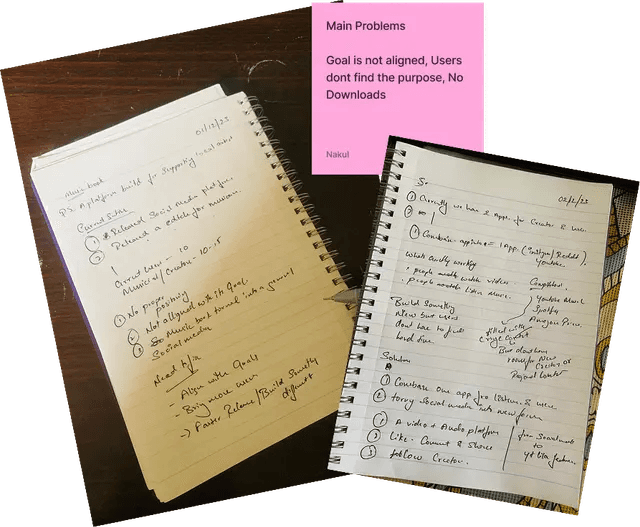
The initial launch of Music Book misaligned with its core vision. Instead of being positioned as a regional music platform, it leaned too heavily into generic social media features. This blurred brand identity led to low adoption only 10–20 downloads in six months and disengaged users who didn’t find enough value.
solution
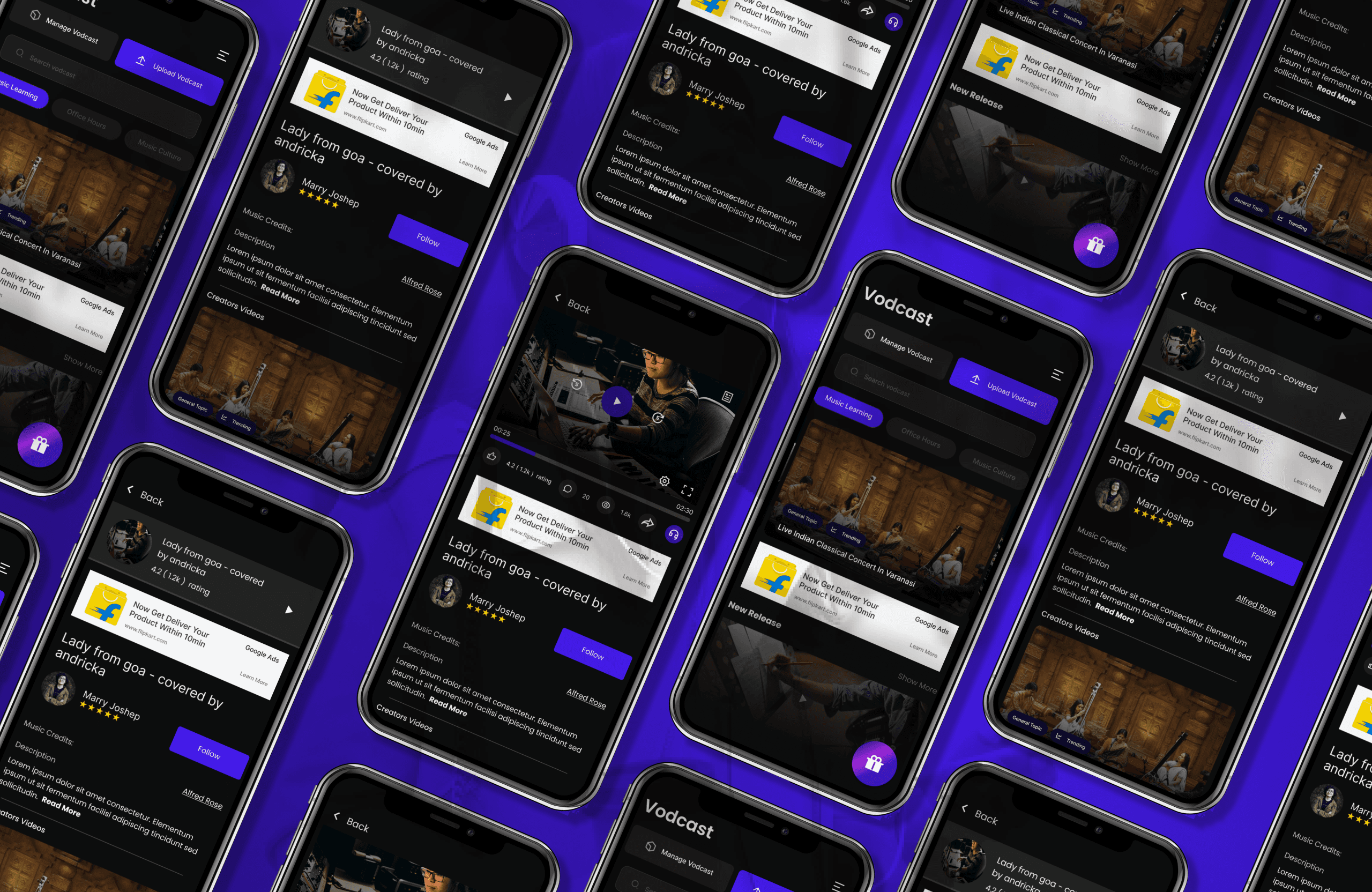
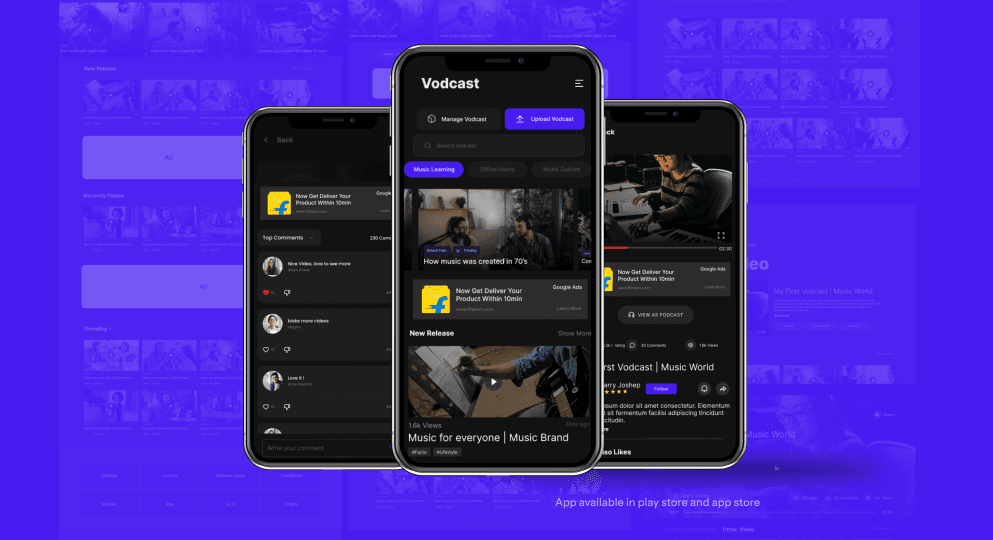
The redesign of Music Book focused on restoring its core vision of supporting regional artists and authentic local music. Unnecessary social features were removed to simplify the experience and make music discovery central. A new Vodcast feature allowed artists to share performances in video format, encouraging user interaction through ratings and comments. Inspired by YouTube Music, a video-to-audio switch was introduced for seamless listening on the go. The interface highlighted regional talent and made audience engagement more meaningful. As a result, Music Book transformed into a focused, artist-first platform with improved usability, increased downloads, and stronger audience connection, successfully positioning itself as a dedicated space for regional creativity and community growth.
Challenges
The challenge was clear:
Reposition the product back to its core purpose (regional music + artist-first).
Create an engaging experience that builds loyalty and drives word-of-mouth.
Restore the brand as a serious platform for artists, not just another social media app.
Approach & Solutions
To realign Music Book with its core vision as a regional music-first platform, I led the design direction by:
Refocusing the Core Experience Removed unnecessary social media–like features (feeds, posts, unrelated interactions) that diluted the platform’s identity. Re-centered the app around artists, music, and audience engagement.
Introducing Vodcast
Designed a dedicated video streaming feature to showcase regional music through both vertical and horizontal formats. Enabled users to rate (⭐), comment, and share performances, fostering meaningful artist-fan interaction. This positioned Music Book as a unique hybrid of music and media, not just another streaming app.
Dual Experience: Watch or Listen
Inspired by YouTube Music, added the ability to switch seamlessly between video and audio mode. Gave users freedom to either watch a performance or listen on the go without disrupting playback. Improved retention by making the app usable in more contexts (travel, work, study).
Audience-Centric Engagement
Simplified discovery flows to surface regional talent front and centered.
Ensured the new features directly support artists’ visibility and audience growth, aligning product design with the brand’s mission
Design Approach
My design approach for Music Book focused on aligning business goals (audience growth, artist visibility) with user needs (easy discovery, engaging experience). I followed a structured process:
Understanding the Users & Context
Identified two key personas:
Artists - need a platform to showcase music, gain visibility, and engage with fans.
Listeners - want seamless access to regional music, with modern features like discovery, ratings, and flexible consumption.
Conducted a feature audit of existing social-media-like elements that caused confusion and low engagement.

Defining Core Experience
Reframed Music Book as a music-first platform rather than a social network.
Prioritized three pillars: Discover, Engage, and Consume (Video + Audio).
Leveraging Familiar Patterns for Faster Adoption
Choose a YouTube / YouTube Music–inspired interaction model for video & audio switching.
Reason: Users are already accustomed to this pattern ~ reducing the learning curve and making it easier to adapt.
This strategic choice ensured the app feels intuitive on first use, while still being tailored to regional music discovery.
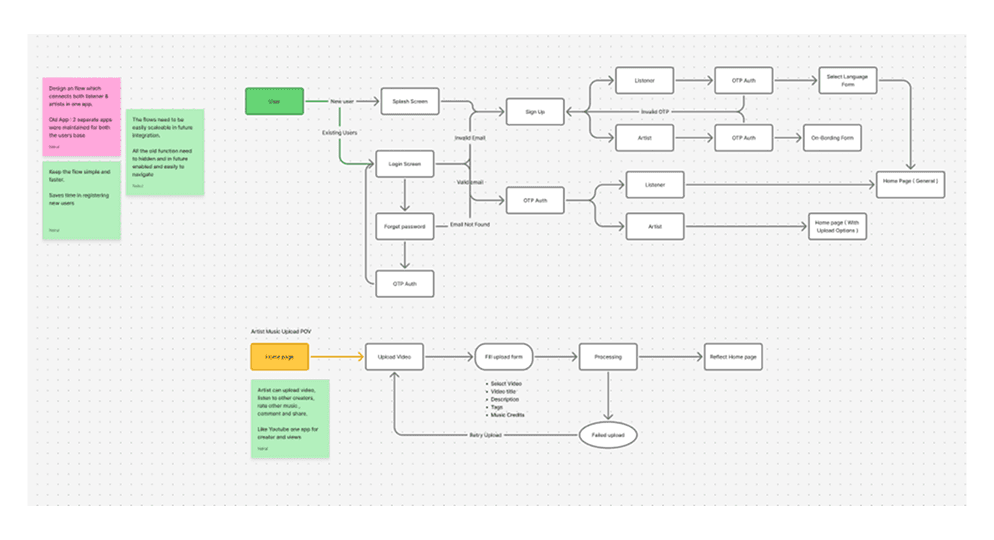
Information Architecture
Design Outcome
The redesign of Music Book successfully repositioned the product as a regional music-first platform while introducing engaging and familiar features for users.
Key Results:
1,000+ downloads in the first 3 months after launch — a significant jump from just 10–20 downloads in the previous six months.
Improved artist visibility through Vodcast, with videos becoming the primary driver of engagement.
Higher user adoption — listeners quickly adapted to the YouTube-inspired interface, reducing friction and improving retention.
Stronger brand positioning — Music Bookis now recognized as a platform built for regional artists, not just another social media app
Takeaway: By focusing on user familiarity + product vision alignment, the redesign turned Music Bookfrom a struggling app into a growing platform with clear identity and user traction.
01
02
03
see also