Talkio Mobile
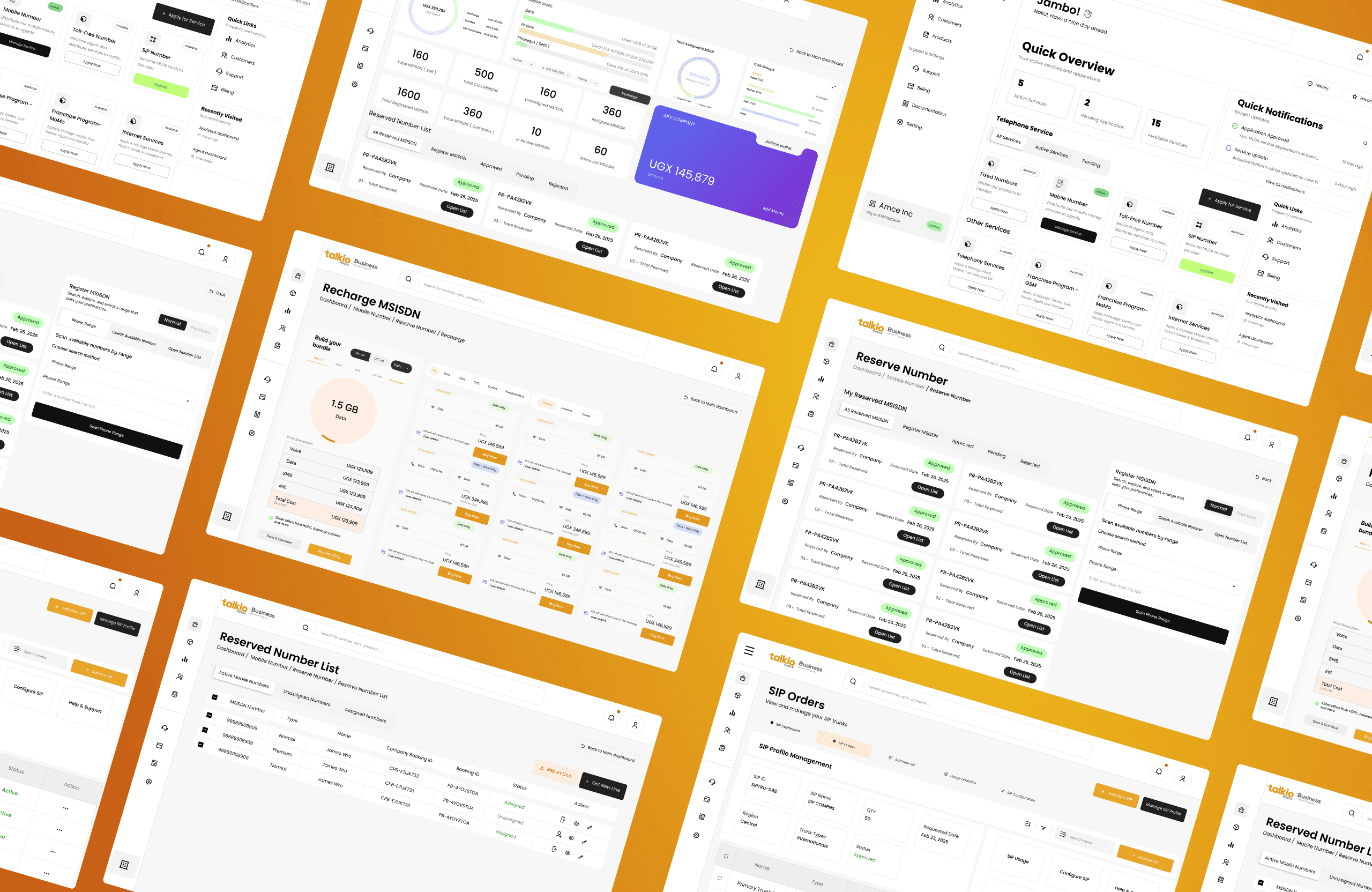
This project involved designing and unifying Uganda’s telecom digital ecosystem, which included customer web platforms, dealer and sub-dealer panels, agent tools, eKYC systems, and internal dashboards. As the end-to-end UI/UX designer, I led the design direction, system architecture, and collaboration with cross-functional dev teams for over three years. The goal was to create a connected ecosystem that simplified operations, enhanced user trust, and established a unified digital identity for the telecom brand — all while being designed remotely from India
00
problem
The telecom’s digital infrastructure was fragmented and inconsistent across its customer, dealer, and agent touchpoints. Each platform worked in isolation, causing operational inefficiencies, data gaps, and poor user experience. - The eKYC onboarding flow had high drop-offs due to lengthy forms and unclear guidance. - Dealer and sub-dealer tools were outdated, making tracking revenue and cash transactions unreliable. - There was no unified design language, creating confusion and brand inconsistency. - Remote collaboration made it challenging to fully understand user context, local workflows, and compliance needs. The result was a system that was hard to scale, hard to use, and disconnected from both its users and its goals.
solution
The solution was to design a cohesive multi-platform ecosystem that brought all user types — customers, dealers, sub-dealers, agents, and internal teams — into a single digital framework. A unified design system was developed to ensure visual consistency and usability across all tools. The eKYC process was redesigned with shorter steps, progress indicators, and contextual feedback to reduce drop-offs. Dealer and agent dashboards were reimagined with clear transaction visibility, real-time revenue insights, and accountability tracking. Through progressive rollouts, each platform was validated and improved before integrating into the larger ecosystem, ensuring smooth adoption and measurable impact.
The Core Challenges
Fragmentation — multiple disconnected platforms for customers, dealers, and agents.
Inefficient Onboarding — eKYC processes caused drop-offs and compliance issues.
Outdated Dealer Tools — sub-dealers and agents lacked streamlined workflows.
Inconsistent UX/UI — no unified design language across the ecosystem.
Remote Barriers — understanding regulations, flows, and user behavior from outside the country.
Research Approach
Designing a telecom ecosystem from India for Uganda required deep research and validation at every stage
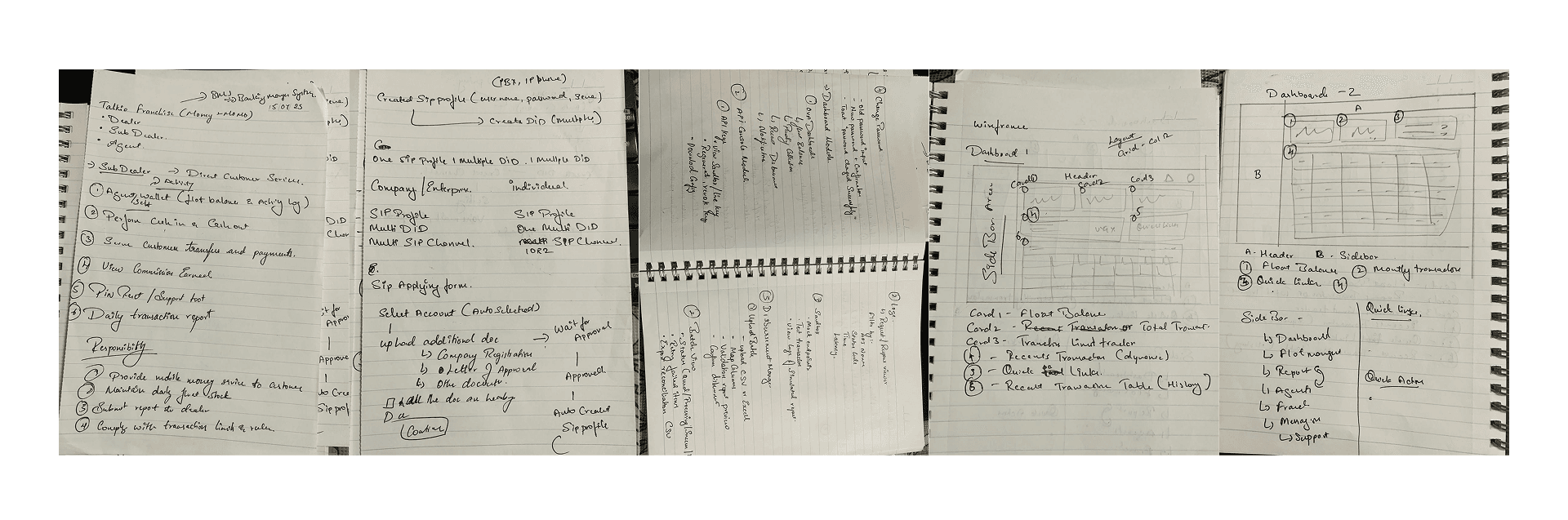
Methods I used:
Competitor Benchmarking Studied global and African telecom providers (Airtel, MTN, Safaricom, Jio) to identify best practices in dealer portals, eKYC, and customer flows.
Stakeholder Interviews Regular workshops with Uganda Telecom leadership, dealer managers, and internal teams to map existing workflows and pain points.
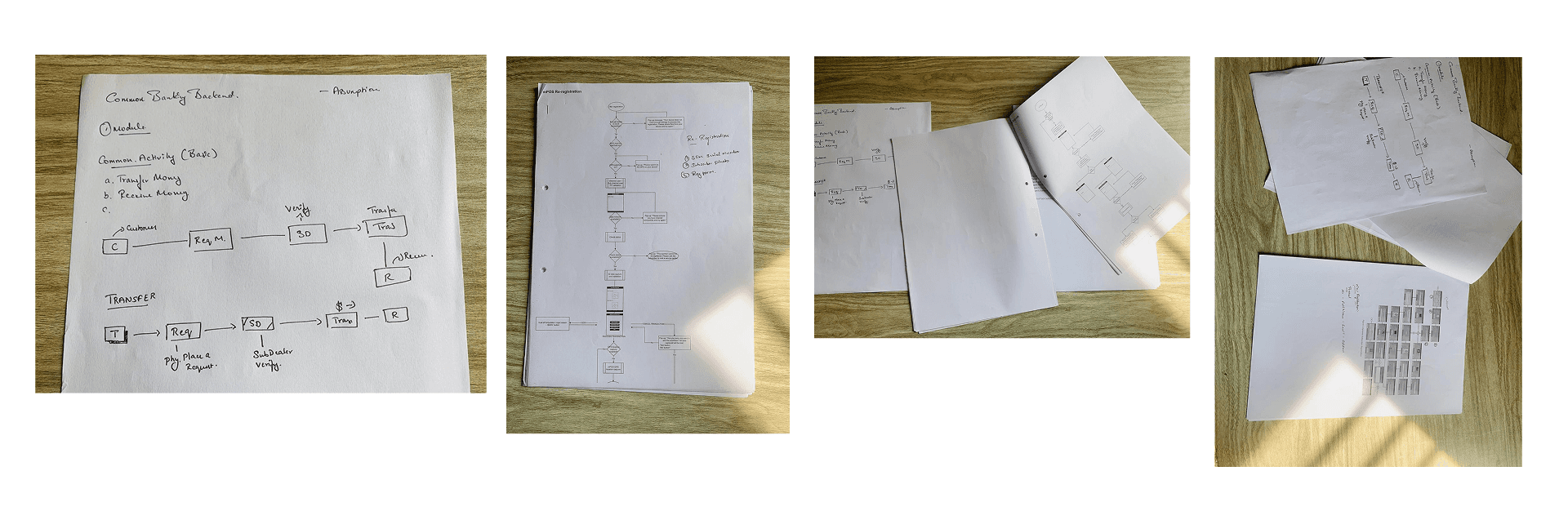
Process Mapping Broke down how dealers, sub-dealers, agents, and customers interact in real scenarios (cash in/out, onboarding, compliance).
Data-Driven Insights Used transaction data and error logs to prioritize high-impact redesigns (e.g., dealer transaction confirmation, KYC drop-off reduction).
Remote Contextual Research Since I was based in India, I relied on video calls, recorded agent demos, and stakeholder walkthroughs to understand the ground reality.
My Approach
Ecosystem Mapping ~ Mapped all user types: customers, dealers, sub-dealers, agents, internal teams.
User Journey Flows ~ Created detailed process flows for Cash In/Out, eKYC, Onboarding, Dealer Operations.
Design System Creation ~ A consistent design language usable across all platforms.
Cultural Familiarity ~ Simplified experiences by adapting patterns users already knew (similar to global apps).
Progressive Rollouts ~Tackled one platform at a time, validated, then integrated into the larger ecosystem.
Module Design Under Talkio Mobile
Customer Module
Agent Module
Distributor Module
Company / Business Module
Franchise Module
Outlet Module
Inventory Module
Services Module
Sub Dealer Module
Contact to lean more.
01

02
03
see also